Craft for Conversations · 2020
Migrant Worker Inclusion
Using concrete, resin, and gold glass chips to explore migrant worker inclusion in Singapore, and what it means to build a shared community.
Year
2020
Location
Singapore
Partner
Welcome In My Backyard (WIMBY)

Why inclusion became the material question
This was my first project on Craft for Conversations, where I make creations that can help spark conversations on topics. I was working on a craft project using concrete, which inspired me to think of the construction industry, and foreign workers.
Inclusion of the migrant worker community has been a long-standing issue in Singapore, brought sharply into focus during the Covid-19 pandemic when widespread transmission took place in foreign worker dormitories. Dormitories were built because Singaporeans weren't comfortable with foreign workers living amongst us.
Resin
The local community: visually different from concrete, echoing the perception that the two communities should remain separate.
Gold glass chips
The sparkle we have in us — the essence, interests, and small points of light that can connect us as people.
Four variations, one evolving question
The pieces move from separation, to visible commonalities, to integration, to comfort without needing a shared interest as the bridge.

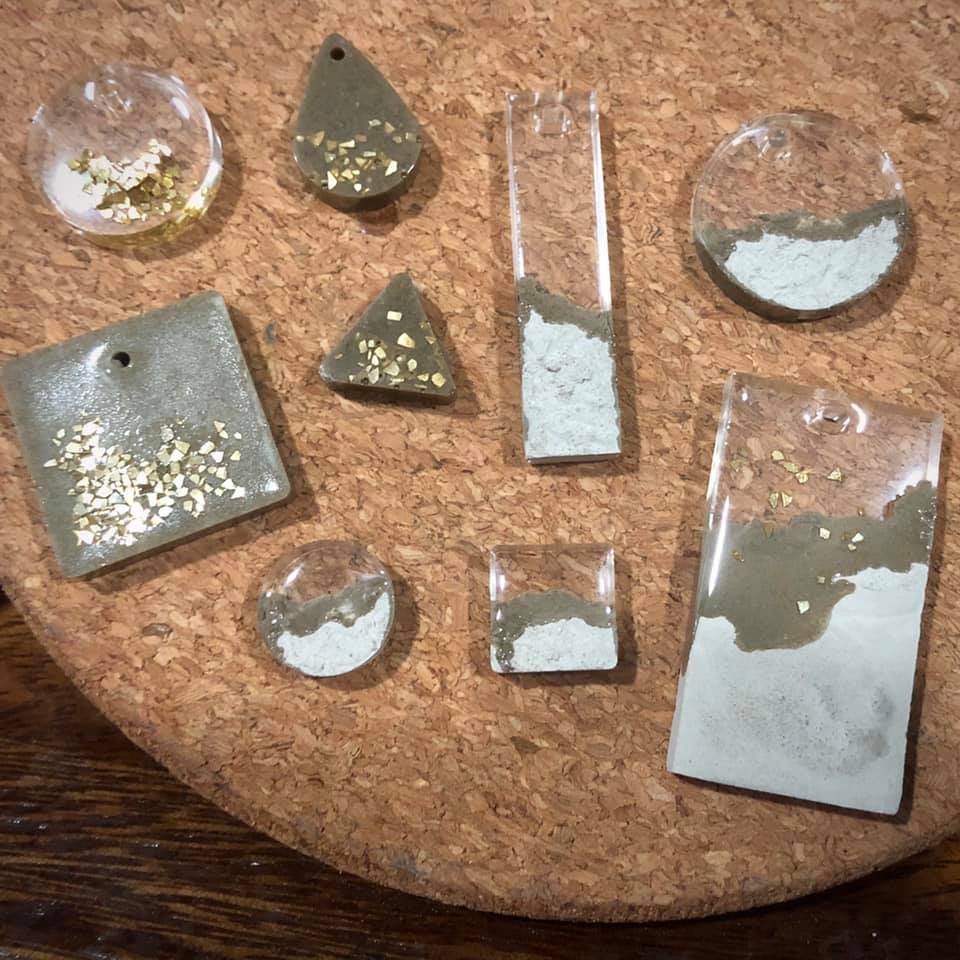
Variation 1 — Resin and concrete are distinct layers. Migrant communities are separate from the local community; the emphasis is on difference, distance, and hierarchy.

Variation 2 — Gold glass chips appear across both layers. As awareness grows, we begin to look for common interests and shared points of light that can connect us as people.

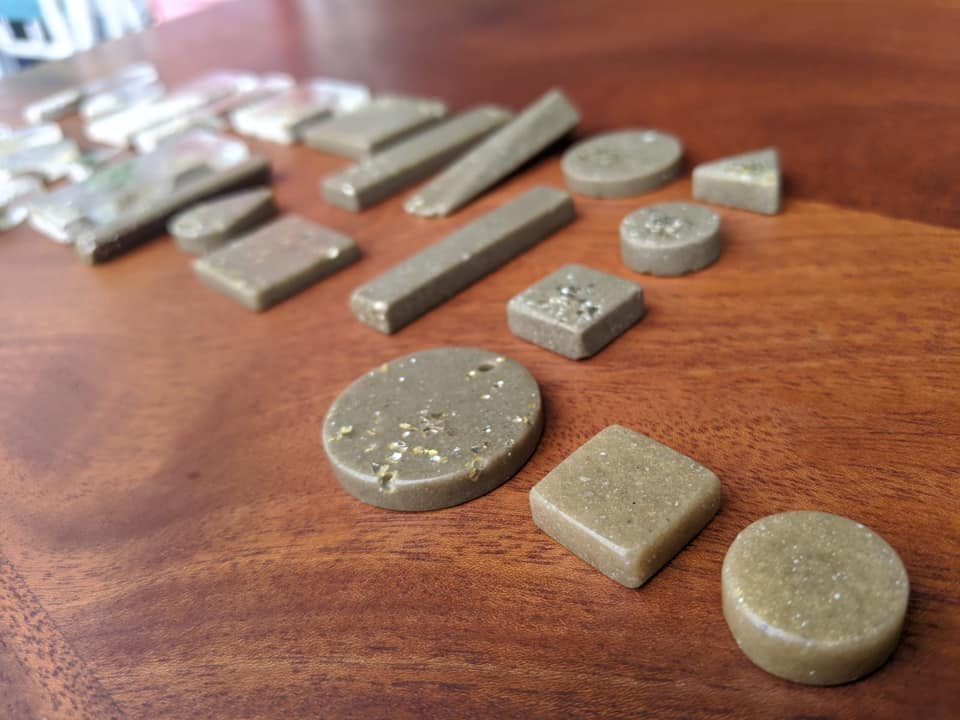
Variation 3 — Resin and concrete are mixed. Over time, the separation becomes less important, and commonalities become the focal point: one community of human beings with shared interests.

Variation 4 — Gold pigmented resin and concrete mixed. The hope is a stage where we are comfortable interacting as fellow humans, without needing a common interest to justify connection.
Reflection 1: the leap of faith
I wasn’t sure if concrete mixed with resin would work. The two materials were learned separately, and I was afraid the combination would cure poorly or look odd. But the output was beautiful. The parallel I saw was hesitation around integrating migrant communities more fully into local communities — a fear of not knowing what it will be like. Sometimes a leap of faith reveals that our worries were unfounded.

Reflection 2: sanding as a community stress test
The hardest part of the process was sanding. Pieces with distinct resin and concrete sections were harder to sand because sediment from the concrete could scratch the resin. Mixed pieces were easier because the texture was more consistent. It made me think about Covid as an external stressor: when communities are kept separate, the response becomes more fragile, and one community’s vulnerability can still affect the whole.
01 · Sanding represents an external threat to the community: in this case, the Covid virus.
02 · When materials are distinct and separate, it becomes more difficult to fight the threat.
03 · When one part gets scratched, the whole piece still needs care: a reminder that segregated communities remain interconnected.


A conversation carried forward
All proceeds from this project were donated to Backyard Conversations, an initiative by Welcome In My Backyard (WIMBY), to promote and deepen conversations around the migrant worker issue.